
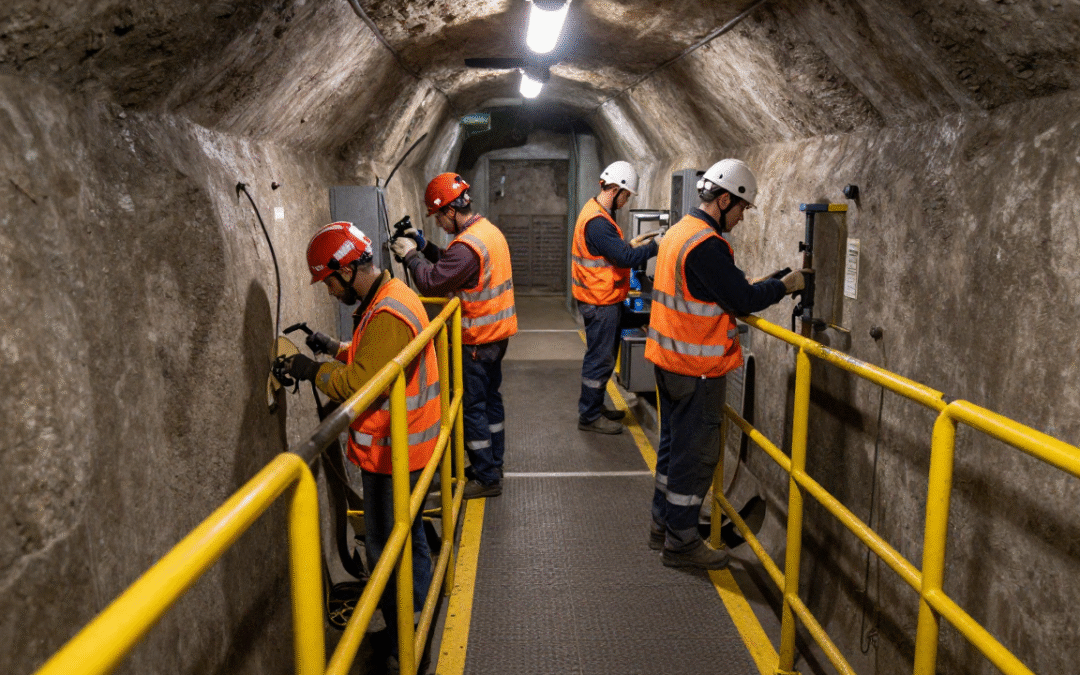
Mining operations rely on complex electrical systems to keep equipment running, lights on, and communication flowing underground. While these systems are essential, they can also be extremely dangerous if they aren’t properly controlled during maintenance or repair. Electrical incidents in mines can lead to serious injuries, costly equipment damage, or even fatalities, which is why strict energy control is a non-negotiable part of mine safety.
Lockout/tagout procedures for electrical systems in mines are designed to make sure equipment is completely de-energized before anyone starts work. When done correctly, these procedures protect miners, maintenance teams, and contractors by preventing unexpected power restoration and helping operations stay compliant with MSHA and OSHA requirements.
This article breaks down the purpose, process, and best practices of lockout/tagout in mining, showing how effective implementation reduces risk and strengthens a culture of safety.
Purpose and Importance of Lockout/Tagout in Mining
The main purpose of lockout/tagout (LOTO) procedures is to control hazardous energy during equipment maintenance, repairs, or inspections. In mining, this is especially critical because electrical systems are often high-voltage, interconnected, and powered by multiple energy sources. Without proper safeguards, these systems can be accidentally energized with devastating consequences.
As part of electrical safety standards in mining operations, properly implemented LOTO procedures help prevent electrocutions, arc flashes, and electrical fires. They also support regulatory compliance, reduce downtime caused by accidents, and protect the mine’s workforce. When miners are trained in energy control protocols, they can perform their work with confidence, knowing equipment has been safely isolated. LOTO procedures aren’t just a regulatory checkbox—they’re a vital component of electrical safety and a key defense against electrical hazards underground.
Electrical Energy Sources That Require Lockout/Tagout
Mining equipment is often powered by more than one electrical energy source. These can include high-voltage distribution lines, transformers, backup generators, control circuits, and stored energy in batteries or capacitors. Each source presents a potential hazard if it isn’t properly identified and isolated. Before maintenance begins, all active and stored energy sources must be located and controlled. This includes primary and secondary circuits, control panels, and any residual energy that could cause equipment to move or energize unexpectedly. Thorough training helps miners recognize these risks and avoid dangerous assumptions. By identifying and isolating every electrical energy source, lockout/tagout procedures for electrical systems in mines greatly reduce the chance of unexpected energization.
Roles and Responsibilities During Lockout/Tagout Operations
Effective lockout/tagout depends on clearly defined responsibilities, with special emphasis on qualified electrical personnel and their role in mine safety. Supervisors, electricians, and maintenance workers all have specific duties that support safe energy control. Supervisors are responsible for making sure procedures are followed and workers are properly trained. Authorized employees—often including qualified electrical personnel—carry out lockout/tagout activities and verify that all energy sources are fully isolated. Affected employees must be informed when LOTO is in progress and stay clear of locked-out equipment. Clearly defining these roles improves accountability and reduces the likelihood of errors that could lead to accidents.
Step-by-Step Lockout/Tagout Procedures for Mine Equipment
A standard lockout/tagout process typically follows these steps:
- Notify affected personnel that maintenance is required
- Identify all energy sources connected to the equipment
- Shut down equipment using normal operating procedures
- Isolate energy sources and apply locks and tags
- Verify isolation by attempting to start the equipment
- Complete maintenance or repair work
- Remove locks and tags and notify personnel before re-energizing
Carefully following each step protects miners from accidental energization and reinforces safe electrical maintenance practices underground.
Verifying Electrical Isolation Before Maintenance Begins
Verification is one of the most critical steps in the LOTO process. Applying a lock and tag alone isn’t enough—the energy source must be tested to confirm it’s truly de-energized. This may involve checking control panels, using voltage testers, or inspecting monitoring devices. Verification eliminates guesswork and prevents false assumptions about equipment status. By emphasizing this step, mines significantly reduce injury risk and reinforce the importance of thorough energy control.
Managing Group Lockout/Tagout in Complex Systems
Many mining tasks require multiple workers to service the same equipment at the same time. Group lockout/tagout ensures that each worker applies their own lock and tag, and that power cannot be restored until everyone has completed their work. Clear communication and coordination are essential. Supervisors must account for all workers involved and verify that every lock has been removed before re-energizing the system. Managing group LOTO is a critical part of lockout/tagout procedures for electrical systems in mines, especially when dealing with complex or high-risk equipment.
Training Workers on Proper Lockout/Tagout Practices
Strong LOTO programs depend on comprehensive training. Miners and maintenance personnel need to understand not only the procedures, but also the hazards and regulatory requirements tied to energy control. Training typically includes classroom instruction, hands-on demonstrations, and scenario-based exercises. Workers learn how to apply locks and tags, verify isolation, and respond if something goes wrong. Well-trained employees are more confident, make fewer mistakes, and contribute to a safer work environment. Consistent training ensures lockout/tagout practices are applied correctly across all mining operations.
Common Lockout/Tagout Violations in Mining
Some of the most common LOTO violations include failing to identify all energy sources, improperly applying locks or tags, skipping verification steps, or ignoring group LOTO requirements. Inadequate training and lack of supervision can also lead to unsafe practices.
Identifying and correcting these issues helps reduce accidents and improve compliance. Lessons learned from violations are often incorporated into refresher training to strengthen lockout/tagout procedures for electrical systems in mines.
Recordkeeping and Compliance for Lockout/Tagout Programs
Accurate recordkeeping plays a major role in both safety and regulatory compliance. Important records include written LOTO procedures, training certifications, equipment-specific plans, and maintenance logs. Maintaining detailed documentation allows mines to demonstrate compliance with MSHA and OSHA standards, identify trends, and continuously improve energy control programs. Strong recordkeeping supports safer operations and more effective audits.

Preventing Electrical Accidents Through Proper Energy Control
Well-implemented LOTO programs significantly reduce electrical incidents. By isolating energy sources, verifying equipment status, and investing in worker training, mines can prevent electrocutions, arc flashes, and fires. A strong safety culture—reinforced through consistent procedures and ongoing education—ensures energy control is treated as a standard practice, not an optional step. This approach protects miners while also improving operational reliability.
Preventing Electrical Hazards Through Effective Lockout/Tagout in Mines
Consistent, well-executed lockout/tagout procedures are the foundation of electrical safety in mining. When every worker understands their role, follows established protocols, and takes energy control seriously, the risk of electrical accidents drops dramatically—and everyone goes home safer.