

Mining environments rank among the most hazardous workplaces in the world. The combination of heavy mobile equipment, narrow haul roads, and unpredictable terrain creates a constant risk landscape. To manage these challenges effectively, mining operations must prioritize two areas: equipment control and roadway condition management. Together, these strategies not only reduce the likelihood of accidents but also support regulatory compliance and improve overall operational efficiency.
This guide outlines best practices, key regulations, and tactical approaches that help create safer conditions for both workers and mobile equipment operators.
The Importance of Equipment Control in High-Risk Work Environments
In a mining context, equipment control involves far more than the technical ability to operate heavy machinery. It requires a deep understanding of how to safely maneuver vehicles through complex, often changing terrain. Poor control can result in serious incidents, including vehicle rollovers, collisions, and damage to both equipment and infrastructure.
Effective equipment control helps reduce accident risks, improve uptime, enhance compliance with MSHA standards, and lower maintenance costs. Even the most experienced operators can struggle when conditions shift unexpectedly—making strong control protocols a component of mine safety.
Workforce Compliance: MSHA, OSHA, and Site-Specific Regulations
Strict regulatory oversight from agencies like the Mine Safety and Health Administration (MSHA) and the Occupational Safety and Health Administration (OSHA) ensures that workplace safety remains a top priority. To meet these expectations, mining operators must follow MSHA Part 56 and Part 57 regulations, which address mobile equipment use and roadway safety.
This means maintaining appropriate signage, enforcing speed limits, and establishing safe travel routes. Operators must also develop and communicate traffic control plans specific to each site’s layout and risk profile. Documentation is essential to demonstrate compliance during inspections, and failing to meet standards can result in costly citations and increased exposure to accidents.
Training Requirements for Operators Working in Challenging Terrain
Comprehensive training is the foundation of safe equipment operation. MSHA mandates that operators complete New Miner Training, which includes instruction on roadway hazards and equipment controls. Additionally, workers must undergo task-specific training for each type of machinery they operate.
Refresher courses ensure that operators remain current on evolving regulations and safety practices. Importantly, hands-on training—especially for navigating steep grades, unstable surfaces, and low-visibility areas—helps operators build the situational awareness and decision-making skills needed to respond to unexpected hazards confidently and effectively.
The Role of Supervisors in Enforcing Equipment and Roadway Safety
Supervisors play a pivotal role in promoting and enforcing safety standards on-site. Their responsibilities include monitoring operator compliance with traffic rules, conducting daily equipment and roadway inspections, and ensuring that any identified hazards are reported and addressed immediately.
When unsafe behaviors or conditions are observed, supervisors must take corrective action without delay. Consistent leadership and accountability help establish a safety-first culture, reinforcing the idea that safety is everyone’s responsibility—from entry-level operators to senior management.
How Roadway Conditions Impact Mobile Equipment Safety
Unsafe road conditions are a leading cause of mobile equipment incidents. Uneven surfaces, potholes, soft shoulders, and loose gravel can all compromise vehicle stability. To mitigate these risks, haul roads must be properly maintained. This includes compacting surfaces, ensuring adequate drainage to prevent erosion, and applying dust suppression methods to preserve visibility.
High-traffic zones require frequent grading and repair to remain safe for use. The condition of site roads has a direct impact on operator control and the mechanical integrity of equipment—making proactive maintenance non-negotiable.
Designing for Safety: Improving Haul Road Conditions and Site Routes
Designing roads with safety as a top priority is one of the most effective strategies for reducing incidents on mining sites. Haul roads should be engineered to safely accommodate two-way traffic, with consistent gradients that align with the capabilities and limitations of mobile equipment. Protective berms should be installed along drop-offs, and pedestrian areas must be clearly marked and physically separated from vehicle routes to avoid conflict points.
Many of the same principles apply to rail-integrated sites, where designing for safety and improving operations and communication at railroad sites requires careful coordination of vehicle crossings, signaling systems, and safe access routes. Whether for haul roads or rail corridors, optimizing site layout and traffic flow not only reduces congestion and the risk of accidents, but also enhances overall efficiency and site communication.
Environmental Factors: Dust, Visibility, Traction, and Weather Challenges
Environmental conditions often introduce additional layers of risk to roadway and equipment safety. Dust clouds can obscure vision, while wet or icy surfaces reduce traction and increase stopping distances. Fog, darkness, or heavy rainfall can hide hazards that might otherwise be visible under normal conditions.
To manage these challenges, mining operations should employ water sprays or dust suppressants, invest in high-quality lighting systems, apply anti-skid materials to high-risk areas, and monitor weather conditions in real time. Anticipating environmental impacts and adjusting operations accordingly is important for maintaining safe working conditions.
Using Technology to Improve Equipment Control and Roadway Safety
Advancements in technology are transforming how mines manage safety. GPS tracking allows for real-time monitoring of mobile equipment, helping to optimize routes and avoid bottlenecks. Collision avoidance systems provide operators with alerts when obstacles or personnel are in proximity, reducing the chances of accidents caused by blind spots.
Telematics systems collect data on speed, braking, and operator behavior, allowing supervisors to identify risky patterns and take corrective action. Automated alerts for hazardous roadway conditions further enhance situational awareness. When used strategically, these technologies create a multi-layered approach to safety management that complements traditional practices.
Improving Traffic Control and Mobile Equipment Safety Through Hazard Mitigation
Improving traffic control and mobile equipment safety in mining operations requires a proactive approach to hazard identification and mitigation. A well-designed traffic plan should incorporate high-visibility signage, clearly posted speed limits, and the strategic separation of pedestrian and vehicle routes to minimize interaction points. Enhancing visibility at blind intersections with mirrors or warning systems adds an extra layer of protection, while scheduling equipment movement during off-peak hours helps reduce congestion and the likelihood of incidents.
By addressing potential hazards before they become critical, mining sites can streamline traffic flow, reduce risk, and provide operators with the space, visibility, and situational awareness needed to maintain control and operate safely.
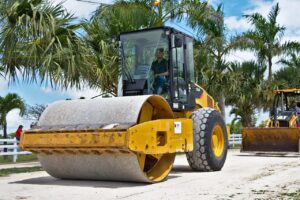
Preparedness and Prevention: Daily Inspections and Emergency Protocols
Daily inspections are a part of hazard prevention. Before every shift, operators should inspect brakes, tires, steering systems, and hydraulics to ensure equipment is functioning correctly. Simultaneously, roadways should be checked for ruts, debris, or washouts that could compromise safety.
Beyond prevention, emergency preparedness is key. Every site should have a detailed response plan for equipment malfunctions, collisions, or other incidents. Regular drills and first-aid training ensure that workers can respond quickly and effectively—minimizing both harm and operational downtime.
Strengthening Safety Through Equipment Control and Roadway Management
Creating a culture of safety in mining operations demands a proactive, all-encompassing strategy. By focusing on strong equipment control practices, maintaining roadways, investing in targeted training, and adopting modern safety technologies, companies can drastically reduce risks.
Safe operations not only protect lives but also increase efficiency, improve compliance, and ultimately support long-term productivity. The combination of planning, training, leadership, and innovation forms the foundation of a safer, more sustainable mining environment.