
Mining remains one of the most hazardous industries worldwide, requiring stringent safety measures to protect workers. Among these measures is the colored hard hat standard—a protocol that goes beyond basic head protection. More than just a piece of safety gear, the color-coded helmet system facilitates on-site communication, promotes safety awareness, and helps maintain order in high-risk environments. This article explores the significance of hard hat colors in mining and how this simple system contributes to accident prevention and a safer work culture.
Does the Color of a Hard Hat Matter in the MiningIndustry?
In the fast-paced and often chaotic environment of a mine, especially one with limited visibility, hard hat colors serve as essential visual cues. They allow workers, supervisors, and emergency personnel to quickly identify the roles and responsibilities of individuals on site.
For example, a yellow helmet might designate a general laborer or entry-level miner, while white typically indicates a supervisor or safety officer. These distinctions aren’t just helpful—they can be extremely beneficial in emergencies. In emergencies, delays in recognizing who’s who can lead to fatal consequences. The color-coded system helps eliminate this risk by allowing for instant role recognition.
What Is the Colored Hard Hat Standard in Mining?
The colored hard hat standard is a site-specific protocol that assigns different helmet colors to different job roles and levels of experience within a mine. While variations exist between companies and regions, most sites follow broadly recognized patterns to ensure consistency and clarity.
By standardizing helmet colors, mine sites can improve communication, reinforce awareness of job functions, and make it easier for newcomers and visitors to recognize key safety personnel. In emergency situations, these distinctions help teams coordinate more efficiently, potentially saving lives. Overall, a consistent color standard creates a safer environment where every worker’s role is visually clear.
Who Sets and Enforces the Hard Hat Color Standards in Mining?
Although the Mine Safety and Health Administration (MSHA) does not impose federal rules dictating hard hat colors, it does encourage robust site-specific safety protocols. In practice, mine operators develop their own helmet color policies using industry best practices and guidance from organizations such as MSHA, the American National Standards Institute (ANSI), and the Occupational Safety and Health Administration (OSHA).
During safety inspections and audits, MSHA officials often review hard hat protocols to ensure they are clearly defined and consistently enforced. This regulatory attention underscores the importance of maintaining an effective and understandable helmet color system on every mine site.
Common Hard Hat Colors and What They Signify
Though there is no universally mandated color scheme, many mining operations use similar color standards to indicate vario
us roles:
- White helmets typically belong to supervisors, engineers, and safety officers.
- Yellow is commonly worn by general laborers and entry-level miners.
- Blue is used for electricians and technical specialists.
- Green often designates new hires or safety trainees.
- Red is associated with emergency responders such as firefighters.
- Orange usually signifies visitors or outside contractors.
- Gray may be worn by temporary workers or additional trainees.
This visual classification system ensures that everyone—from new workers to experienced crew members—can quickly understand who is responsible for what, particularly in time-sensitive or high-
risk scenarios.
Differences Between Surface and Underground Hard Hat Protocols
Color-coding may vary depending on whether the mining operation is surface-based or underground. Surface mines tend to favor bright colors like yellow, orange, and green for maximum visibility in daylight conditions. Conversely, underground mines often rely on lighter shades such as white and blue, which reflect artificial light more effectively in dim environments.
Despite these practical differences, the purpose remains constant: improving visibility and promoting fast, accurate identification in environments where every second counts.
Why Color-Coding Matters for On-Site Safety
In mining, the ability to quickly and accurately identify personnel is essential for safety. During an emergency, a clearly visible hard hat color allows supervisors to quickly locate and direct the right individuals. Safety officers can be identified instantly, evacuation coordination is streamlined, and confusion is minimized.
Without a standardized system, roles can become ambiguous, slowing response times and increasing the likelihood of accidents. Color-coding brings order to chaos, especially in high-pressure or hazardous situations.
How the Colored Hard Hat System Helps Prevent Accidents
The benefits of color-coded helmets extend far beyond organization. They actively contribute to accident prevention by highlighting who needs supervision, who is authorized to be in restricted areas, and who can perform specialized tasks.
For instance, trainees or inexperienced workers weari
ng green helmets are easily spotted, prompting supervisors to provide additional oversight. Similarly, visitors and contractors can be identified and monitored to ensure they don’t enter hazardous or unauthorized areas. In emergency situations, identifying rescue personnel by their red helmets can shave valuable seconds off response time. Ultimately, this system helps reduce human error and role confusion—key factors in many workplace accidents.
Training Workers on the Meaning Behind Hard Hat Colors
Even the most well-designed system is only as effective as the understanding behind it. That’s why comprehensive training is crucial. New workers should receive instruction during onboarding that clearly explains the color-coding system, its purpose, and how it applies to daily operations.
This training should include an overview of role-based color designations, how to quickly identify key personnel, and any site-specific deviations from standard color practices. Regular refresher courses ensure that all workers—new and experienced—remain aligned with evolving safety standards.
Reinforcing Safety Culture Through Visible Identification
In high-risk environments like mining, the ability to identify roles at a glance reinforces discipline and accountability. A helmet color doesn’t just communicate responsibility—it symbolizes it. Visual identifiers such as hard hat colors help maintain structure and order, especially in fast-paced or emergency situations.
Accountability in Mining Safety
Color-coded helmets also serve a deeper purpose: they promote accountability. When responsibilities are clearly visible, everyone on site is more likely to follow proper protocols and procedures. Supervisors, for instance, can be quickly located for approvals and instructions. Trainees are identifiable, prompting more experienced workers to offer guidance or keep a closer watch. Safety officers, whose roles are critical during inspections or emergencies, stand out in the crowd.
This system not only supports safety compliance but also reinforces a culture of shared responsibility—where everyone understands their role and those of the people around them. By making accountability visible, hard hat color standards contribute to a safer, more organized work environment.
Real-World Examples of the Colored Hard Hat System in Action
Many mining operations have reported tangible safety improvements after adopting color-coded helmet systems. In one instance, a coal mine in West Virginia saw a 17% reduction in accidents after implementing a clear hard hat identification protocol. Similarly, an Australian copper mine improved its emergency response times by over 30% following a revision of its helmet color standards.
These real-world successes highlight the practical value of a standardized, easy-to-understand safety tool. When everyone knows who is who, teams can operate with greater efficiency and awareness.
Challenges and Misunderstandings Around Color Standards
Despite the clear benefits of color-coded helmet systems, implementation isn’t always consistent across mining operations. Some companies face challenges when contractors bring their own color schemes that don’t align with the site’s standards, creating confusion among workers. In other cases, the absence of adequate training can lead to misinterpretations—where helmet colors are misunderstood or ignored altogether.
Personalization is another issue. While it might seem harmless, adding stickers, decals, or paint can obscure the helmet’s original color, diminishing the system’s effectiveness. These deviations from protocol can make it difficult to identify individuals quickly during emergencies or inspections.
To overcome these obstacles, mines must ensure that color standards are clearly communicated and rigorously enforced. Every worker—whether permanent, temporary, or contract—should understand the site’s specific color scheme, and supervisors should monitor for compliance. A successful system relies on education, consistency, and clear expectations.
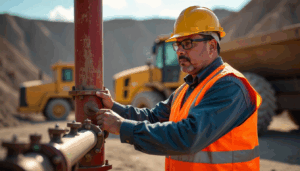
Miners’ Rights: Empowering Workers to Ensure Safety
It’s also important to emphasize that miners are protected under MSHA regulations and have the right to question unclear or inconsistently applied safety standards—including those related to helmet colors. If a worker feels unsure about the meaning or enforcement of a particular safety protocol, they can request clarification without fear of retaliation.
These protections ensure that safety remains a shared, transparent priority. Empowering workers to speak up fosters a more communicative and accountable safety culture across the entire mining operation.
The Role of Hard Hat Color Standards in Safer Mining Operations
Hard hat colors do more than protect the head—they protect the entire workforce. When consistently applied and well understood, a color-coded helmet system becomes a powerful tool for improving communication, enhancing coordination, and reducing accidents.
The simplicity of the system is what makes it so effective. By assigning meaning to color, mines can standardize expectations, improve response times, and reinforce a strong safety culture. It’s a visible commitment to protecting lives—one helmet at a time.