
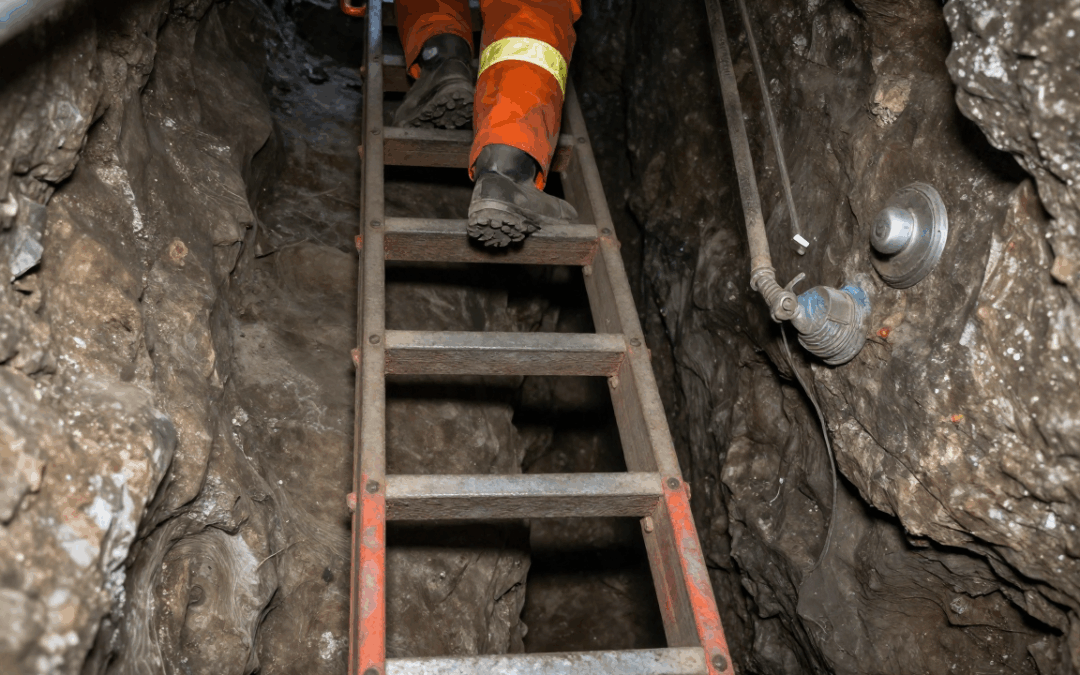
Mining operations demand constant attention to safety, and ladders are a critical part of underground work. Strong ladder construction, reinforced side-rails, and proper clearances allow miners to move efficiently and safely, even in challenging environments. Conversely, poorly designed ladders or inadequate spacing can lead to slips, falls, and equipment damage, making ladder safety a top priority for mine operators.
In previous articles, we covered ladder maintenance, handrails, toe clearance, and landings. This article builds on that foundation, exploring how construction quality, material choices, and clearance planning directly affect miner safety and operational efficiency.
Choosing the Right Ladder Materials for Harsh Mining Environments
Durable materials are essential for ladder longevity. Mining ladders must withstand moisture, dust, chemicals, and extreme temperatures. Steel provides excellent load capacity and durability, often coated to resist corrosion. Aluminum is lightweight, rust-resistant, and suitable for certain underground applications, while fiberglass is non-conductive and ideal for areas with electrical hazards. Selecting the right material balances strength, weight, and environmental resistance, reducing wear and preventing structural failures that could endanger miners.
Structural Reinforcement Techniques That Increase Ladder Longevity
Reinforcing ladders enhances both safety and lifespan. Adding cross-bracing or gussets to side-rails, using welded joints instead of rivets, and incorporating non-slip rung surfaces all help prevent flexing and buckling under heavy loads. These techniques ensure ladders can handle frequent use and the weight of miners wearing personal protective equipment (PPE) without compromising stability.
How Proper Side-Rail Strength Prevents Ladder Buckling
Side-rails bear the majority of a ladder’s load, making their strength critical. Insufficiently strong rails can buckle, particularly during emergencies when miners descend quickly or carry equipment. Using high-strength steel or reinforced fiberglass rails, inspecting for corrosion or damage, and maintaining consistent rail spacing all contribute to ladder stability. Strong side-rails reduce vibrations and instill confidence in miners navigating vertical spaces.
The Effects of Poor Construction on Ladder Stability and Flexing
Improper ladder construction can cause instability and unsafe flexing. Uneven rung spacing, weak fasteners, and misaligned rails all increase the risk of slips, trips, and falls, particularly when miners carry tools or PPE. Regular inspections and construction audits help ensure ladders maintain their designed load capacity and rigidity over time.
Designing Ladders That Support Heavy Equipment and PPE Loads
Miners frequently carry heavy gear, including helmets, lights, and tools. Ladders must safely accommodate these loads. Load calculations should account for average miner weight with full PPE, additional equipment, and dynamic forces from climbing. Incorporating adequate safety margins ensures ladders do not fail under operational stresses, protecting miners and maintaining productivity.
Understanding Clearance Requirements for Safe Movement Underground
Adequate clearance around ladders is essential to prevent bumps, trips, or entanglement. Miners need enough space between rungs and walls, sufficient headroom, and lateral room to move safely while carrying equipment. Following the most important MSHA ladder safety regulations helps ensure these clearances meet federal safety standards. By incorporating these regulations into regular audits and design reviews, mines can maintain safe ladder spacing that protects miners and supports efficient, hazard-free movement underground.
Clearance Planning in Tight Mine Shafts and Vertical Spaces
Underground mines often have restricted spaces, requiring careful clearance planning. Angled ladder placement, adjustable or modular ladders, and visible low-clearance markers help miners navigate safely in narrow shafts and uneven passages. Thoughtful planning reduces the risk of contact injuries and falls.
How Engineering Controls Reduce Injuries in Ladder-Access Areas
Engineering controls like guardrails, anti-slip coatings, and shock-absorbing materials are essential for reducing injuries around ladders. When these controls are combined with essential guidelines for toe clearance, handrails, and safe landings, they create a comprehensive safety system that protects miners during everyday operations and emergency situations. Training miners to recognize controlled hazard zones further strengthens these measures, helping prevent falls and ensuring safer ladder access throughout the mine.
Comparing Ladder Construction Standards Across Mining Operations
Mining operations vary in ladder design and safety standards. Benchmarking practices across sites highlights best practices, such as consistent material use, rail reinforcement, standardized rung spacing, and regular clearance checks. Following these proven methods ensures ladders meet or exceed MSHA and industry guidelines.

The Connection Between Ladder Strength and Miner Confidence
Strong ladders not only prevent injuries but also increase miner confidence. When miners trust their equipment, they move efficiently, focus on tasks, and follow proper procedures. Weak, unstable ladders increase stress and hesitancy, raising the risk of missteps. Ensuring construction integrity and proper clearance supports both safety and productivity underground.
Building Safer Mines: The Critical Role of Strong Ladders and Proper Clearances
Safety requires a combination of strong ladder construction and thoughtful clearance planning. High-quality materials, reinforced rails, appropriate load support, and well-planned clearances collectively protect miners from falls and injuries. Operators should implement preventive maintenance, routine inspections, and training programs to maintain ladder integrity. By investing in robust ladder infrastructure and adhering to MSHA standards, mines can create safer, more productive environments for all workers.