
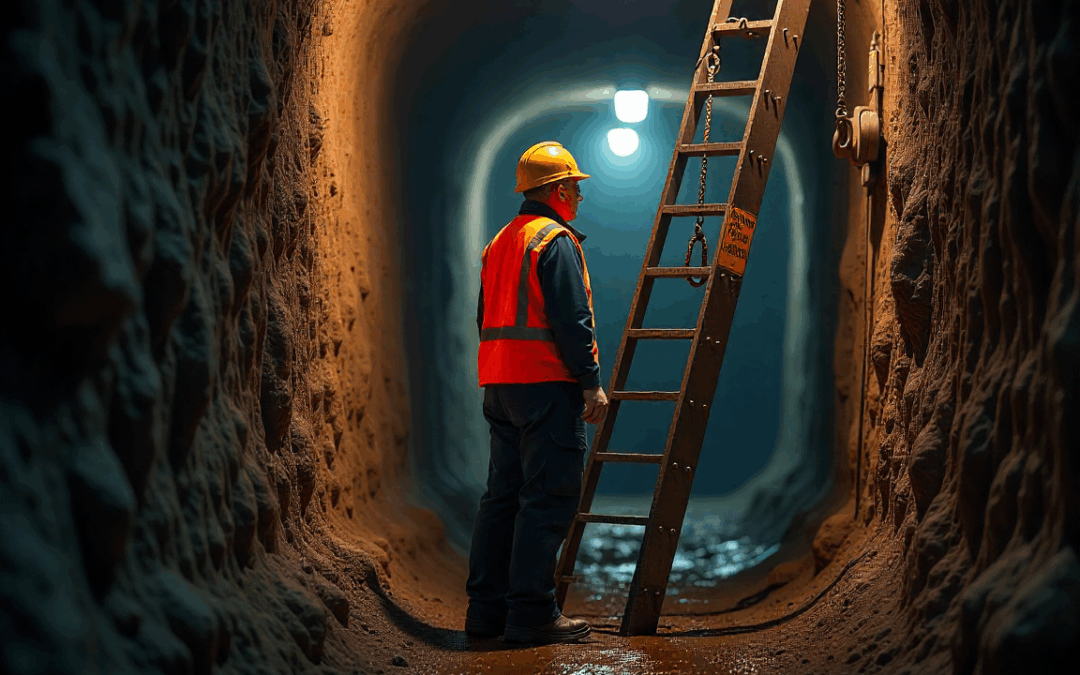
Ladders are used constantly in mining, but when they’re not properly maintained, they can quickly become hazardous. Small issues—like corrosion, worn fasteners, or damaged landings—can grow into serious risks that lead to falls and injuries underground. Learning how to spot early warning signs, carry out preventive maintenance, and track ladder conditions over time is essential for protecting miners and staying compliant with MSHA standards.
If you’ve followed our earlier discussion on ladder safety in mining, you’ll remember the focus on toe clearance, handrails, and proper landings. While that article looked at ladder design, this one shifts the focus toward maintenance—ensuring ladders stay safe long after they’re installed.
Early Warning Signs That a Mine Ladder Is Approaching Failure
Catching early warning signs can prevent both accidents and expensive repairs. Miners and supervisors should watch for changes like bent or deformed rungs, cracks in wood or metal, loosening handrails, and ladders that wobble more than they should. Even subtle movement can signal that structural components are failing. Regular inspections and consistent documentation help ensure these issues are corrected before they create dangerous situations, and they also reinforce accountability on the job.
How Corrosion and Environmental Exposure Weaken Ladder Components
Mining environments are hard on ladders. Underground humidity, water exposure, dust, chemicals, and extreme temperatures all contribute to corrosion. The damage often develops slowly and may not be obvious at first, but even small areas of rust can weaken rungs, handrails, and supports. This is why understanding how strong ladder construction and proper clearances is so important—structural strength and adequate spacing become even more critical as ladders age.
Preventive steps such as applying rust-resistant coatings, limiting water accumulation, and using materials built for harsh mining conditions help slow the effects of corrosion. Early detection remains essential, because once corrosion reduces load capacity, the likelihood of sudden ladder failure increases significantly.
The Importance of Bolting, Fastener Checks, and Hardware Integrity
Hardware holds the entire ladder together, making bolts, screws, and fasteners essential to ladder safety. When hardware loosens or wears out, it compromises the ladder’s stability, even if the rest of the structure looks fine. Routine maintenance should include tightening connections, replacing worn fasteners, and ensuring all hardware components are compatible with the ladder material. Overlooking these basics can result in unexpected failures that could have been easily prevented.
Common Maintenance Mistakes That Lead to Unexpected Ladder Breakdowns
Many ladder failures come down to avoidable maintenance errors. Skipping scheduled inspections, using cleaning methods that damage surfaces, ignoring small defects, or failing to train miners on proper ladder care all contribute to accelerated wear. These oversights may seem minor in the moment, but they accumulate quickly and can turn a serviceable ladder into a major hazard. Addressing these maintenance gaps early helps prevent breakdowns and protects workers.
Developing a Preventive Maintenance Routine for All Ladder Types
A structured maintenance plan is the foundation of long-term ladder safety. Effective routines typically include daily visual checks, weekly inspections of structural integrity, monthly stress or load assessments, and seasonal evaluations focused on corrosion and weathering. Following this schedule helps mines catch issues early, extend ladder lifespan, and maintain compliance with MSHA requirements.
Why Regular Load Testing Helps Identify Hidden Structural Issues
Load testing is one of the most effective ways to uncover issues that aren’t visible during routine inspections. By simulating real-world and emergency use, load testing reveals weaknesses hidden beneath the surface. Documenting test results over time helps track deterioration and guides decisions about repairs or replacement. For miners, knowing that ladders are regularly load-tested also reinforces confidence in the equipment they rely on every day.
Using Inspection Logs to Track Ladder Wear Over Time
Documentation is a crucial part of any maintenance program. Inspection logs make it easy to track inspection frequency, note areas of damage, record completed repairs, and document any incidents or near misses. Keeping these records not only creates accountability but also helps identify long-term wear patterns that might not be obvious during a single inspection. Over time, logs provide valuable insights that support better decision-making and more effective safety planning.
Tools and Technologies That Improve Ladder Condition Monitoring
New tools and technologies make ladder monitoring more efficient and reliable. Digital inspection apps allow teams to log findings quickly and accurately. Non-destructive testing equipment can detect internal cracks or weaknesses that aren’t visible to the eye. Some modern systems even incorporate sensors that monitor corrosion and stress in real time. These technologies help maintenance teams identify problems earlier, reduce manual errors, and manage large numbers of ladders across complex mining operations.
How Poor Maintenance Impacts Emergency Escape Routes
Ladders aren’t just tools for everyday operations—they’re often part of critical escape routes. Poorly maintained ladders can obstruct these paths, fail during evacuation, or slow down miners when seconds matter. Regular inspections, proper cleaning, and ensuring ladder components remain structurally sound are essential to keeping escape routes accessible and dependable during emergencies. Training miners to use these ladders safely further enhances emergency preparedness.
Building a Maintenance Culture That Reduces Underground Fall Risks
A strong maintenance culture is one of the most effective ways to reduce fall risks underground. This includes training miners to recognize early signs of wear, encouraging prompt reporting of issues, integrating ladder checks into daily routines, and acknowledging proactive safety behavior. Equally important is ensuring all personnel are familiar with the most important MSHA ladder safety regulations, so that maintenance and inspections align with regulatory requirements. When everyone takes responsibility for ladder safety and follows these standards, hazards are identified sooner and addressed faster, creating a safer working environment for the entire operation.
Keeping Miners Safe Starts With Strong, Well-Maintained Ladders
Preventing ladder failures is about more than avoiding accidents—it’s about building a reliable, safety-focused workplace. By identifying warning signs early, addressing corrosion, maintaining hardware, performing load tests, and keeping detailed inspection logs, mining operations can ensure ladders remain safe, dependable, and compliant with MSHA standards. Well-maintained ladders protect miners and keep operations running smoothly, both above and below ground.