
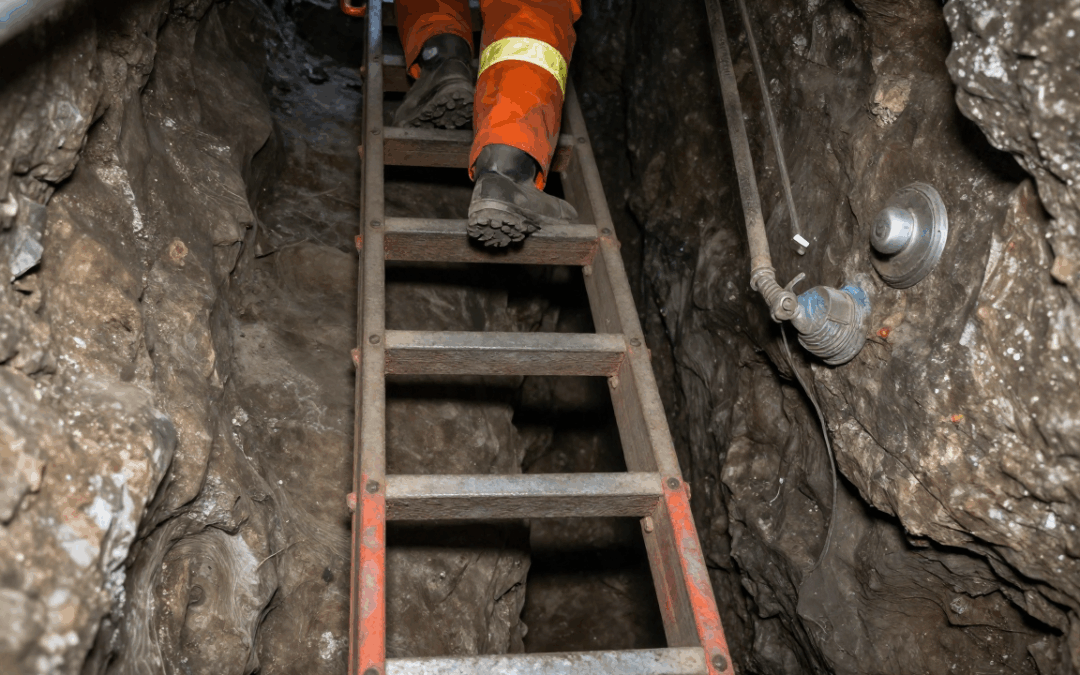
Ladders are used every day in both surface and underground mining, but even small issues—like limited toe clearance, worn or loose handrails, or poorly placed landings—can quickly turn into serious hazards. Ladder safety isn’t just about meeting MSHA standards; it’s about protecting your crew and keeping operations running smoothly. This article highlights the core elements of safe ladder design and maintenance, with a focus on toe clearance, handrails, landings, and miner training.
Designing Mine Ladders to Meet Modern Safety Standards
Ladders in today’s mining operations must meet strict safety requirements and withstand demanding conditions. Key factors—like ladder angle, rung spacing, material durability, and slip-resistant surfaces—play a big role in preventing falls. Understanding how strong ladder construction and proper clearances protect miners is essential when designing ladders, as both structural strength and adequate spacing ensure miners can climb safely in everyday operations and emergency situations. A well-designed ladder should be stable, comfortable to climb, and positioned so it doesn’t interfere with other equipment or safety systems. Regular inspections and updates—especially on older ladders—help maintain compliance with evolving MSHA standards and reinforce overall safety.
Understanding the Role of Ladder Toe Clearance in Preventing Miner Injuries
Toe clearance, the space between a rung and the surface behind it, may seem minor but is a major factor in preventing slips and missteps. When clearance is too tight, miners can catch their boots or struggle to place their feet securely.
Best practices include ensuring consistent spacing, measuring clearances carefully, and confirming that there’s enough room for the type of footwear miners use. Keeping this space unobstructed helps reduce accidents and allows miners to climb with confidence.
Key Handrail Requirements That Improve Stability on Underground Ladders
Handrails provide essential balance and support, especially in underground areas where visibility and space are limited. To be effective, they need to be securely anchored, continuous, and placed at a comfortable gripping height.
During MSHA inspections, damaged or noncompliant handrails are frequently identified as hazards. Upgrading them improves stability and significantly reduces the likelihood of falls—both during routine climbs and in emergency evacuations.
How Proper Ladder Landings Reduce Slips and Missteps
Landings serve as transition points where miners can pause, adjust their footing, and safely move between vertical and horizontal surfaces. When landings are too cramped, poorly lit, or cluttered, they become safety risks rather than safety features.
Effective ladder landings include non-slip surfaces, sufficient space, and strong lighting. They should remain free of debris so miners can move steadily and avoid missteps.
How Landing Platform Placement Affects Emergency Escape Routes
Landing platforms play a key role during emergencies. Poor placement can slow evacuation, reduce visibility, or create bottlenecks when speed is critical.
Properly positioned platforms ensure that escape routes remain clear and easy to navigate. Evaluating both everyday and emergency traffic flow helps maintain compliance and supports quick, safe movement during evacuation scenarios.
Common Clearance Mistakes Found During MSHA Inspections
MSHA inspections often uncover preventable ladder clearance issues, including:
- Rungs too close to nearby walls or supports
- Landing platforms that are too narrow
- Obstructions near ladder access points
Catching and correcting these issues early can prevent citations, reduce injuries, and limit operational delays. Routine inspections and good maintenance practices are the best defense against clearance-related hazards.
Best Practices for Measuring and Maintaining Adequate Toe Space
Adequate toe space requires accurate measurement and consistent upkeep. Recommended practices include:
- Using standardized tools to measure clearance
- Inspecting ladders before and after shifts
- Adjusting rungs or structures that infringe on toe space
- Keeping climbing pathways free of tools and debris
These steps help ensure miners have the room they need to climb safely and comfortably.
Safety Benefits of Upgrading Old Handrail Designs in Mines
Older handrails often fall short of modern MSHA requirements or fail to accommodate updated mining gear. Upgrading them improves both safety and miner confidence.
Benefits include:
- Reduced risk of falls
- Increased stability and grip
- Better compliance with current safety standards
- Fewer MSHA citations
Even small improvements—like replacing worn rails or adding enhanced grip surfaces—can lead to meaningful safety gains.
Training Miners to Recognize Unsafe Ladder Clearances
Training is a key component in preventing ladder-related accidents. Miners should be taught to identify issues such as inadequate toe clearance, damaged or loose handrails, and unsafe landings.
Effective training programs often include:
- Practical demonstrations
- Hands-on hazard identification
- Clear reporting procedures for unsafe conditions
Regular training reinforces safe practices and helps miners stay alert to potential risks.
How Poor Ladder Design Contributes to Underground Fall Accidents
Falls underground are often linked to ladder design flaws—insufficient toe clearance, weak handrails, improper angles, or tight landing spaces. Addressing these issues can dramatically reduce fall incidents. Equally important is understanding why proper maintenance is critical to miner safety, because even well-designed ladders can become hazardous without regular inspections, repairs, and upkeep. By combining modern design standards, upgrades to older ladders, and proper maintenance, along with training miners to recognize risks, mining operations can create a safer workplace and catch potential hazards before they lead to injury.
Putting It All Together: Building Safer Ladders for Every Mining Operation
Ensuring ladder safety requires a comprehensive approach: solid design, proper clearance, reliable handrails, safe landings, emergency planning, and consistent training. When these elements work together, they significantly reduce fall risks and support smoother operations.
Regular maintenance, periodic reviews, and continuous training help maintain a strong safety culture. By taking proactive steps, mining operations can transform ladders from potential hazards into dependable tools that protect workers every day.